
Every year, tens of millions of employment decisions hinge on a piece of paper from a doctor. An employee needs time off to care for a family member. A worker requests a schedule change because of a chronic condition. Someone returns from disability leave and needs a phased re-entry.
Each of these moments is legally significant. Each requires an employer to collect medical certification, evaluate it against a specific legal standard, make a defensible decision, and maintain a record — sometimes for years.
And in almost every case, the process handling this is some combination of fax machines, email threads, PDF forms, and manual review by someone who is not a clinician, not a lawyer, and not equipped to do any of this consistently.
That's the broken layer. And it sits beneath every health-related employment workflow in the country.
When we built Disclo, we started with workplace accommodations because they're one of the hardest problems in HR compliance. Accommodations under the ADA require an employer to understand a specific employee's role, how a health condition impacts their essential functions, what adjustments might be effective, and whether those adjustments remain reasonable as circumstances change — all documented, defensible, and repeatable.
Most organizations were handling this through email and spreadsheets. Decisions lived in people's heads. Context evaporated when managers rotated. When an accommodation request surfaced in litigation, there was often no coherent record of what happened, when, and why.
We built Disclo Core to replace that. But something kept surfacing as we scaled.
The hardest part of the accommodation workflow isn’t intake, communication, or decision logic. It’s medical certification.
Specifically: collecting documentation from a provider, evaluating it against a legal standard, translating it into something an employer could actually use, and documenting it in a way that would hold up months or years later.
We assumed this was an accommodation-specific problem. It isn't. We kept seeing the same pattern across FMLA leave, state leave programs, PWFA, and return-to-work assessments. Different policies, different legal standards — the same broken foundation underneath all of them.
Then signals started coming from every direction. Leave vendors told us medical certification was a painful, expensive process they'd built reluctantly and maintained badly. TPAs said it was their biggest operational drag. Large enterprises said they were comfortable managing workflows in-house but consistently hit a wall when documentation itself needed to be evaluated. Nobody was immune to this problem.
The cost isn't abstract. It falls on everyone.
Providers are buried in poorly structured paperwork that was never designed for them. A provider seeing 30 patients a day doesn't have bandwidth to complete nuanced functional limitation assessments by fax — so they rush it, or miss it, or return something so vague the employer can't use it, and the process starts over. They’re also charging patients (the employees) for this time.
Employees experience this during some of the most difficult moments of their lives. Administrative friction causes people to abandon legitimate claims they're legally entitled to. That's not a paperwork problem. That's a failure of care.
Employers are making high-stakes legal decisions without the infrastructure to make them consistently. EEOC disability filings are at record highs, and many companies discover too late that there's no defensible paper trail to point to.
This is what $9 billion in annual spend looks like when it's fragmented across manual labor and decisions made without a consistent standard.
We didn't set out to build a medical certification engine. We set out to build the most defensible accommodation platform on the market, and medical certification turned out to be the hardest, most differentiated part of doing that well.
As Disclo Core customers scaled, medical certification became the part of the platform they trusted most. And when it became clear that vendors and enterprises across the ecosystem needed this capability without adopting an entirely new system of record, the path forward was obvious.
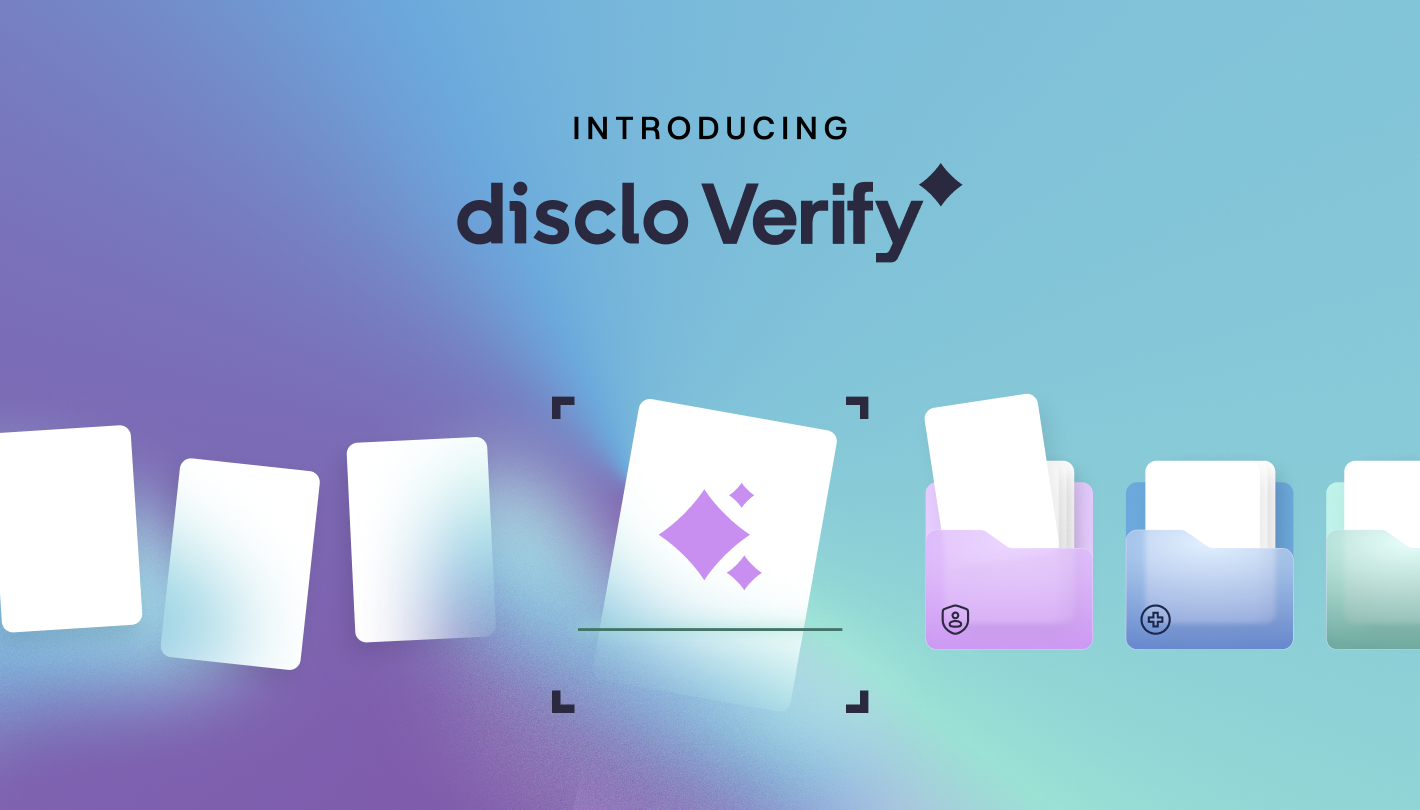
Today we're launching Disclo Verify: the AI-powered medical certification engine we built for ourselves, now available as standalone infrastructure for any employer, vendor, or enterprise that needs it — for FMLA certification, state leave programs, and ADA accommodation verification.
Verify standardizes how medical certification moves through employment workflows, from the initial documentation request through to a structured, audit-ready eligibility output. It's designed to sit alongside existing HRIS, leave, and disability systems via API or standalone access. Nobody has to rip and replace anything.
At the output layer, Verify abstracts away raw medical detail and returns structured eligibility fields — frequency, duration, and functional restrictions — without exposing HR teams to unnecessary PHI. Every output is reviewed by a specialist before release.
Accommodations and leave are the mechanisms through which employees with disabilities, chronic conditions, mental health challenges, and caregiving responsibilities stay in the workforce. When the medical certification process is slow, confusing, or arbitrary, real people lose access to support they're legally entitled to.
Better medical certification infrastructure isn't just a better outcome for businesses. It's a consistent, dignified experience for employees at the moments when the process matters most.
If you're an employer, vendor, or TPA struggling with FMLA medical certification, state leave documentation, or ADA accommodation verification — we built this for you. Verify provides a defensible, standardized medical certification foundation without a system-wide change management lift.
The broken layer has a fix, and we’d love to show it to you. Book a demo of Verify.


Medical certification has been HR's most expensive unsolved problem for decades. We're fixing it.
Every year, tens of millions of employment decisions hinge on a piece of paper from a doctor. An employee needs time off to care for a family member. A worker requests a schedule change because of a chronic condition. Someone returns from disability leave and needs a phased re-entry.
Each of these moments is legally significant. Each requires an employer to collect medical certification, evaluate it against a specific legal standard, make a defensible decision, and maintain a record — sometimes for years.
And in almost every case, the process handling this is some combination of fax machines, email threads, PDF forms, and manual review by someone who is not a clinician, not a lawyer, and not equipped to do any of this consistently.
That's the broken layer. And it sits beneath every health-related employment workflow in the country.
When we built Disclo, we started with workplace accommodations because they're one of the hardest problems in HR compliance. Accommodations under the ADA require an employer to understand a specific employee's role, how a health condition impacts their essential functions, what adjustments might be effective, and whether those adjustments remain reasonable as circumstances change — all documented, defensible, and repeatable.
Most organizations were handling this through email and spreadsheets. Decisions lived in people's heads. Context evaporated when managers rotated. When an accommodation request surfaced in litigation, there was often no coherent record of what happened, when, and why.
We built Disclo Core to replace that. But something kept surfacing as we scaled.
The hardest part of the accommodation workflow isn’t intake, communication, or decision logic. It’s medical certification.
Specifically: collecting documentation from a provider, evaluating it against a legal standard, translating it into something an employer could actually use, and documenting it in a way that would hold up months or years later.
We assumed this was an accommodation-specific problem. It isn't. We kept seeing the same pattern across FMLA leave, state leave programs, PWFA, and return-to-work assessments. Different policies, different legal standards — the same broken foundation underneath all of them.
Then signals started coming from every direction. Leave vendors told us medical certification was a painful, expensive process they'd built reluctantly and maintained badly. TPAs said it was their biggest operational drag. Large enterprises said they were comfortable managing workflows in-house but consistently hit a wall when documentation itself needed to be evaluated. Nobody was immune to this problem.
The cost isn't abstract. It falls on everyone.
Providers are buried in poorly structured paperwork that was never designed for them. A provider seeing 30 patients a day doesn't have bandwidth to complete nuanced functional limitation assessments by fax — so they rush it, or miss it, or return something so vague the employer can't use it, and the process starts over. They’re also charging patients (the employees) for this time.
Employees experience this during some of the most difficult moments of their lives. Administrative friction causes people to abandon legitimate claims they're legally entitled to. That's not a paperwork problem. That's a failure of care.
Employers are making high-stakes legal decisions without the infrastructure to make them consistently. EEOC disability filings are at record highs, and many companies discover too late that there's no defensible paper trail to point to.
This is what $9 billion in annual spend looks like when it's fragmented across manual labor and decisions made without a consistent standard.
We didn't set out to build a medical certification engine. We set out to build the most defensible accommodation platform on the market, and medical certification turned out to be the hardest, most differentiated part of doing that well.
As Disclo Core customers scaled, medical certification became the part of the platform they trusted most. And when it became clear that vendors and enterprises across the ecosystem needed this capability without adopting an entirely new system of record, the path forward was obvious.
Today we're launching Disclo Verify: the AI-powered medical certification engine we built for ourselves, now available as standalone infrastructure for any employer, vendor, or enterprise that needs it — for FMLA certification, state leave programs, and ADA accommodation verification.
Verify standardizes how medical certification moves through employment workflows, from the initial documentation request through to a structured, audit-ready eligibility output. It's designed to sit alongside existing HRIS, leave, and disability systems via API or standalone access. Nobody has to rip and replace anything.
At the output layer, Verify abstracts away raw medical detail and returns structured eligibility fields — frequency, duration, and functional restrictions — without exposing HR teams to unnecessary PHI. Every output is reviewed by a specialist before release.
Accommodations and leave are the mechanisms through which employees with disabilities, chronic conditions, mental health challenges, and caregiving responsibilities stay in the workforce. When the medical certification process is slow, confusing, or arbitrary, real people lose access to support they're legally entitled to.
Better medical certification infrastructure isn't just a better outcome for businesses. It's a consistent, dignified experience for employees at the moments when the process matters most.
If you're an employer, vendor, or TPA struggling with FMLA medical certification, state leave documentation, or ADA accommodation verification — we built this for you. Verify provides a defensible, standardized medical certification foundation without a system-wide change management lift.
The broken layer has a fix, and we’d love to show it to you. Book a demo of Verify.